Or: How I Learned To See My Baby As A Product
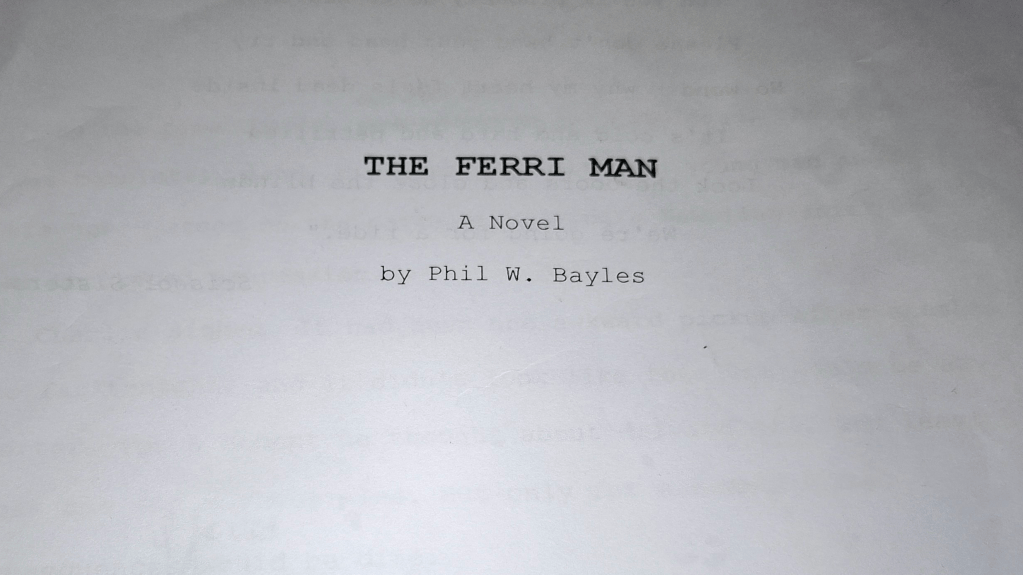
After five years of writing, rewriting, workshopping and beta reading, today I took a massive step towards (hopefully) getting published one of these days. This afternoon, I sent off my first round of queries to literary agents.
If you’d asked me 18 months ago, I’d have told you that my novel would probably never see the light of day. And honestly, I’d have been fine with that: writing a novel is a huge achievement, even if it then stays at the bottom of a drawer (or tucked away in a hard drive) forever. But that all changed when I started to treat my writing as a collaborative process rather than something I did in isolation.
My good friend Joe Pearson helped get me onto the Nantes Writers’ Workshop, and I spent a week in France discussing my craft with some hugely talented writers. Anna Polonyi, one of the workshop’s founders, got me in touch with Writing East Midlands, who invited me onto their mentorship programme. Through that I met Jamie Mollart, my absolutely brilliant mentor, as well as the other incredibly talented writers who made up this year’s cohort of mentees. With every new contact and every new friendship, my writing got a little bit better. At some point, the idea of trying to get published stopped being a pipe dream and just became the logical next step. And now I’m finally ready to take the plunge.
It’s a strange feeling, trying to sell a novel that you’ve spent half a decade working on. After spending so long treating your manuscript like a baby, nurturing it and pruning it like a bonsai, you have to start thinking of it as a Product: a thing to be sold.
There are three parts of your average pitch package. An excerpt of your work, usually a few chapters, to prove you can actually write; a one-page synopsis, to prove you can write a story with a beginning, middle and end; and a cover letter, which is arguably the most crucial of the three. This is the thing that gets you in the door, and more importantly proves that you understand your place in the book’s market.
The best way to do this is through ‘comp titles’: drawing on other books, films or TV shows that your novel is a little bit like. (If you’re curious, mine is a bit like Severance meets The Good Place, with a dash of The Midnight Library and a pinch of Douglas Adams.) When you’ve spent so long trying to do something original, it’s a little jarring to be asked to draw comparisons to other people’s work. But your book is also a product, and it has to sit in a market alongside other products. Finding the best shelf in the bookshop could make the difference between selling dozens of copies and selling millions.
That’s assuming I actually find an agent, of course. To steal a phrase from Ben “Yahtzee” Croshaw, trying to sell a book is kind of like throwing messages in bottles out into a churning sea made up entirely of messages in bottles. It could be weeks before I hear back from the people who I’ve contacted so far, if I hear back at all: most agents are snowed under by their slush piles, and don’t have time to respond to every query they’re sent.
Still, even if nobody wants to pick up the product I can sell, it’s still my baby. I’ve raised it from an idea, and I’m incredibly proud of the manuscript that it’s turned into.
And now, I can start writing the next one…


Leave a Reply