Or: How I Learned To Give Myself More Credit
So, as you’re probably aware if you’ve had a conversation with me over the past five years, I’ve been writing a novel. In fact, I recently reached a pretty significant milestone: last week I sent out a full manuscript to beta readers for the first time.
There’s a strange paradox that comes with being a writer, particularly an emerging one. You desperately want people to read your words, but the idea of actually putting them in front of anyone can be utterly terrifying. It’s all too easy to listen to the critic who lives in your brain and spends all its time convincing you that your work is no good, that you should just give up, go back to the day job.
I once read that the best way to quiet your inner critic is to give it a name, and thereby make it feel less like a part of you and more like an external voice. I call mine Archibald. He’s an old man who looks like the third Muppet who Statler and Waldorf stopped hanging out with when he started hanging out in forums sharing mad conspiracy theories. It makes him so much easier to ignore.
Instead, I’ve been trying to listen to a different voice: one that sounds a lot more like my four-year-old daughter.
My daughter *loves* to draw. Every time she goes to preschool, she comes back home with a backpack full of crumpled-up drawings of that are, to put it charitably, a bit abstract. The faces always have blank, sightless eyes and gurning, toothless mouths. Until a few months ago she went through a phase of giving everybody a disconcerting number of limbs. And yet every time she hands me another drawing I feel a surge of pride: not just because the figures look more recognisable every day, but because of the palpable sense of pride in her own voice. “Look what I did,” she seems to be saying. “Isn’t it awesome?!”
So whenever I’ve had a new piece of writing to share, or a new chapter of the novel I want feedback on, Ive been trying to imagine myself as a small child, handing over a piece of macaroni art. Sure, the glue’s still a bit tacky, and I might have used way too much glitter, but look at this thing I made! All by myself! Isn’t it awesome?!
Then, a few days ago, my good friend Joe — the person who encouraged me to start writing a novel in the first place — gave me some very encouraging feedback on the manuscript. He also said something that’s been rattling around in my brain ever since:
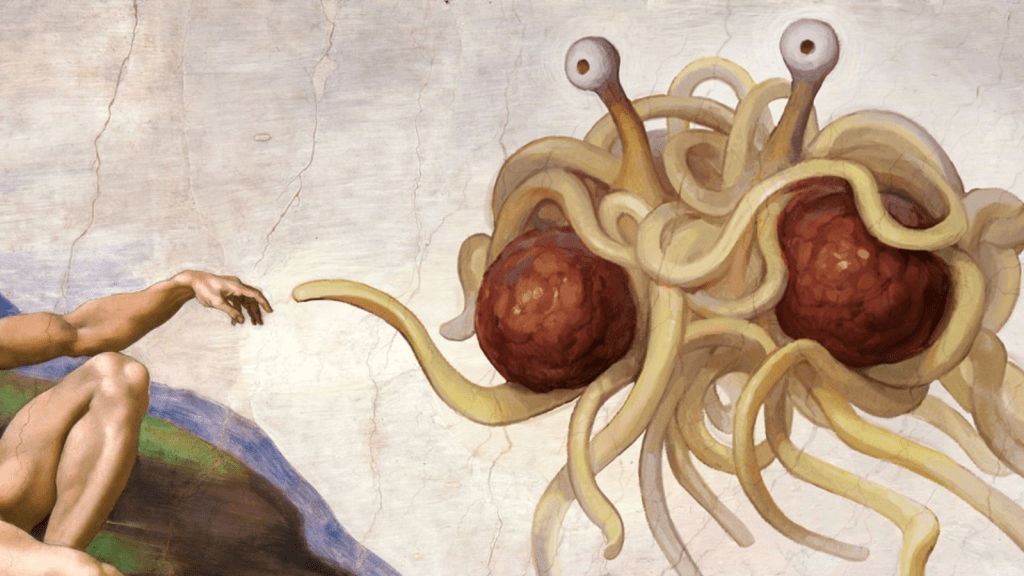
“You wrote a whole damn book! Stop telling people you made a macaroni drawing, and start telling them that you made painted the Sistine Chapel.”
Was Joe saying that my novel was the greatest thing he’s ever read? Probably not. But it did make me think about the nature of writing a book. Inevitably, it happens in chunks: a chapter here, a couple of sentences here, often out of order. Even when I sent the manuscript off to my beta readers, I think I forgot to think of it as a novel. But that’s exactly what I’ve written. A whole story, with a beginning, a middle and an end.
As I sit here trying to figure out how to end this post, part of me wonders whether it feels too much like bragging. But I know that’s just Archibald, grousing away to himself in the corner. I guess what I’m trying to say is that if you’re also in the middle of a big, long-term project, take a step back from it and look how far you’ve come. Look at it in all its glory, even if you know you’re not finished yet
Or, to put it another way: don’t miss the forest for the spaghetti trees.
If you’ve never seen this old April Fools gag from the BBC archives, do give it a watch. It’ll make your day.
Thanks for reading! If you liked this piece and want to read more from me, you can subscribe at the link below.


Leave a comment