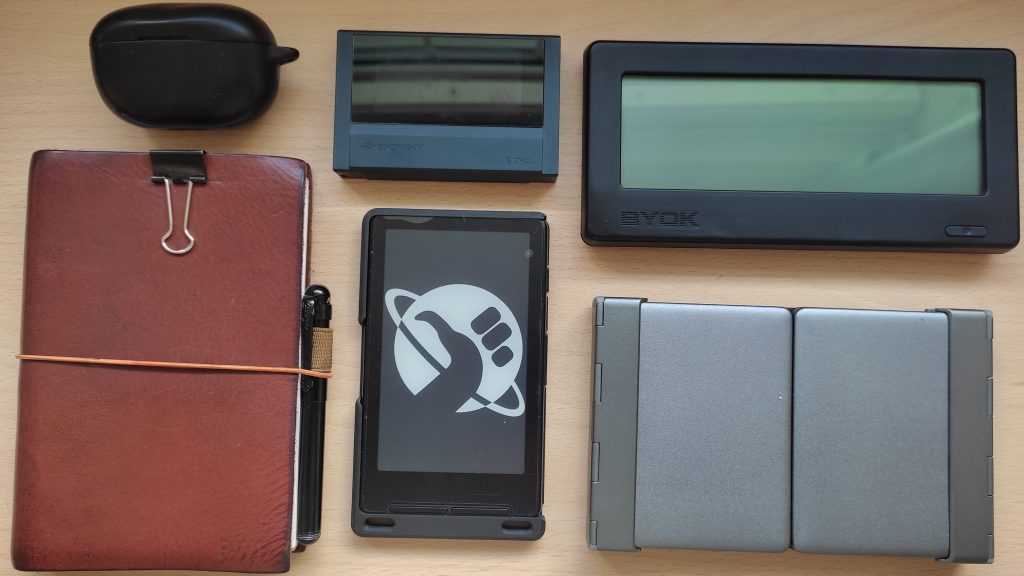
Or: How I Learned The Limits of Digital Minimalism
I’ve always been a sucker for a gadget. Maybe I’m just a slave to novelty, but every time I get wind of some new device or other my mind races with possibilities. How can I use this in my daily routine? Will this, at last, be the thing that unlocks all of my creative potential and lets me bash out an entire manuscript in three months?
Of course, these things always look brilliant on social media, or in the hands of permanently enthusiastic YouTubers. In the cold light of day there’s a good chance they’ll lose some of their luster, and end up gathering dust in the back of a drawer somewhere. At times like this I can’t help but think of my mother seeing me laden with camping equipment, heading off for my first (and only) weekend away as a Cub Scout.
“Look at you,” she said to me. “All the gear and no idea.”
Since the start of 2026, I’ve been making a concerted effort to get myself away from my mobile phone as much as possible. In the process, I’ve found myself being entranced (and in some cases disappointed) by myriad pieces of new technology. And yet I don’t regret buying any of them, because each one has given me a better understanding of what I actually need, and what I don’t. Hence the title of this newsletter.
1. The Typewriter
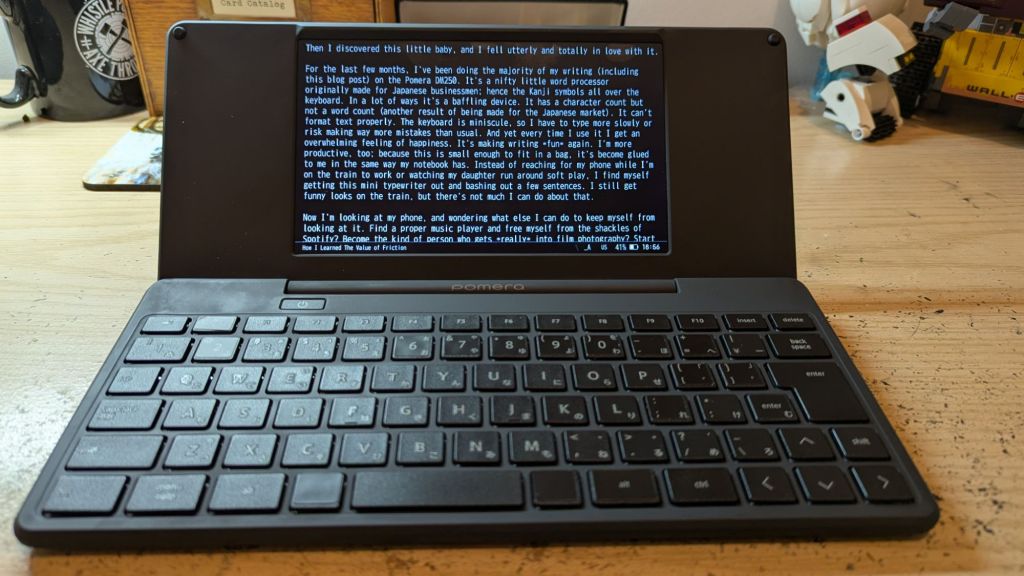
What is it?
The Pomera DM250, an ultra-portable word processor, popular with Japanese salarymen.
Why did I get it?
I wanted a dedicated writing machine that wasn’t connected to the never-ending cavalcade of modern distractions that is the Internet. And as much as I love writing longhand, I don’t think writing a whole novel that way was a realistic prospect.
Did it work?
In a way, yes. My writing sessions have become far more productive since I started using a dedicated writing machine.
In a more accurate way, it broke after two months. Sadly, the Lilliputian keyboard was no match for my Brobdingnagian fingers, and since I bought the machine off eBay there was no easy way for me to get it fixed. The principle was solid, but I needed a different machine.
After a fair bit of researching, I stumbled upon the device I’m using to type these very words. The BYOK is, if anything, more simple than the Pomera was: just a simple display and an SD card for memory. That’s because BYOK stands for “Bring Your Own Keyboard”, and you can pair it up with any Bluetooth-enabled device you fancy.
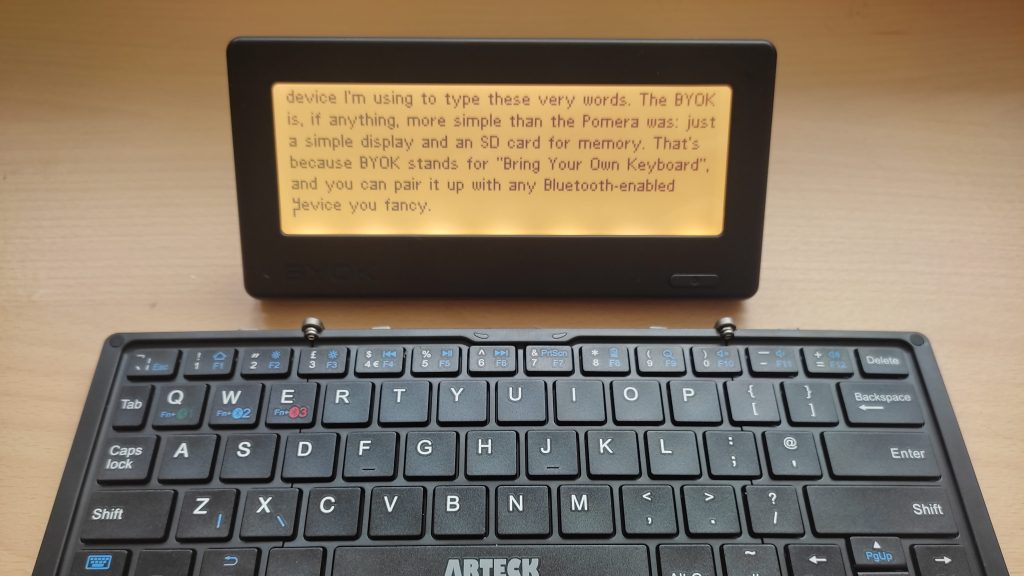
So far it’s proved to be worth its weight in gold. It’s been perfect for getting a few words during my commute or while my daughter runs around soft play, and I’m even planning on taking it abroad with me later this summer. All in all, a big success.
2. The e-Reader
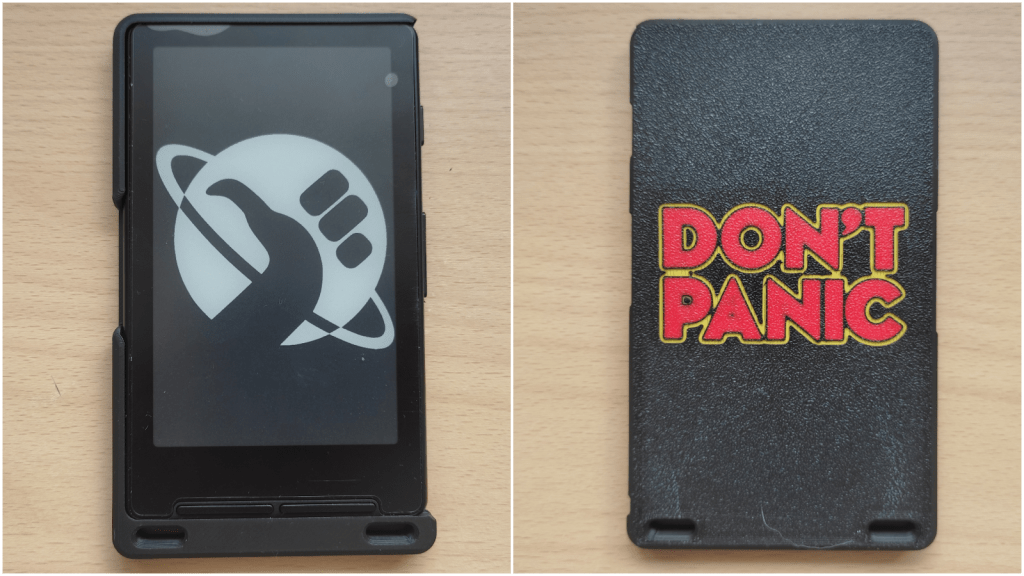
What is it?
The Xteink X4: a Chinese-made e-reader that’s roughly the size of a credit card.
Why did I get it?
I’ve always liked the idea of e-readers as an alternative to print books. In truth, though, it never seemed like that much of an improvement. The average e-reader isn’t that much smaller than a paperback, so it never felt like a worthwhile trade. But the X4, which is roughly the size of a credit card, seemed like the missing step I’d been looking for.
Did it work?
Definitely. Because it’s small and thin enough to keep in my pocket alongside my smartphone, it’s gone with me everywhere for the last few months. Even better, it’s started to become the thing I pick out of my pocket when I’m feeling fidgety in a queue or while waiting for a train. Reading a book is definitely preferable to doomscrolling.
At least, it was until I got a load of new hardbacks and paperbacks for my birthday. There’s still some part of me that finds it hard to resist the allure of a real, physical book. You can’t stick your nose in an e-reader and give it a good sniff; believe me, I’ve tried. Still, maybe it’ll prove its worth on holiday with me this summer when I don’t have to find room for half a dozen novels in my suitcase.
3. The Music Player
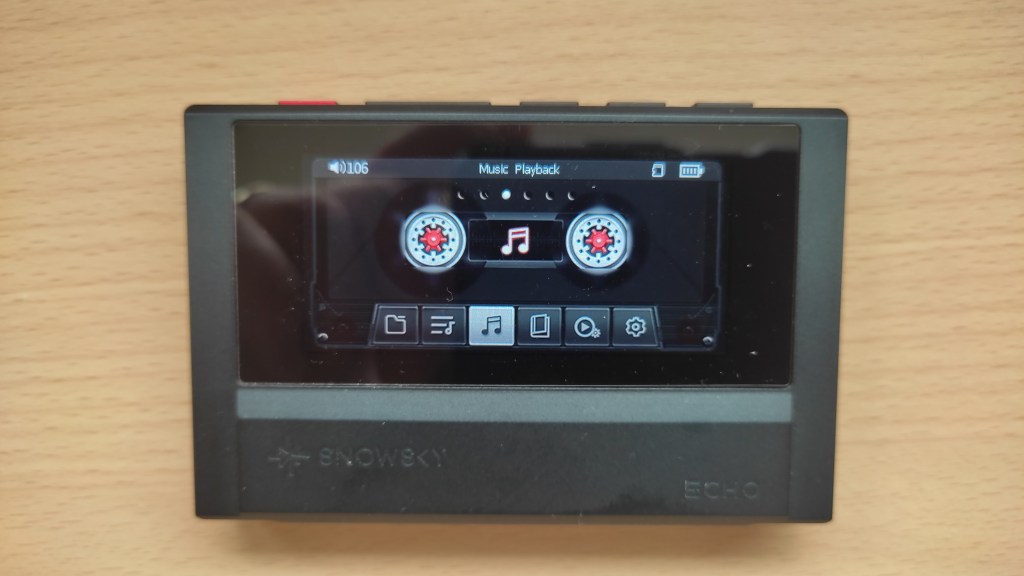
What is it?
The Snowsky Echo, a dedicated audio player that looks charmingly like a retro cassette player, complete with clicky buttons on the top.
Why did I buy it?
Music is one of the things I use my phone for most often, so if I want to reduce my time on it then finding an alternative sounds like a no-brainer. The problem is that most audio players these days are basically just smartphones without the phone, and I don’t want to have yet another app store to tempt me constantly. There’s also the issue of ownership; I’ve been increasingly of a mind to get myself away from Spotify and back to the good ol’ days, when I actually owned my music instead of just streaming it (and earning the musicians a pittance in the process).
Did it work?
Not really. The device itself is nifty, and burning a bunch of CDs to my computer made me feel wonderfully nostalgic for the days when iPods had clicky wheels and didn’t come with U2 albums nobody asked for. The truth is, music streaming is just too damn convenient. Not only is it useful to have all of my favourite albums and podcasts in one place, but the algorithm has also done a stellar job in the last few years of introducing me to stuff that I would never have found on my own.
Maybe the solution is finding another platform; one that gives artists their fair share of profits and doesn’t let fuckwits like Joe Rogan anywhere near the airwaves. If anyone out there can think of one, do let me know.
It’s been a year since I was invited to the Nantes Writers’ Workshop and got the chance to share my work with some incredible writers. This week I learned that Anna Polonyi, who runs the workshop, is now taking pre-orders for her debut novel, Tomorrow We’ll Be Prey. If you like the idea of a historical novel about French cryptids, then bag yourself a copy so you can read it when it’s released in February of next year!


Leave a comment