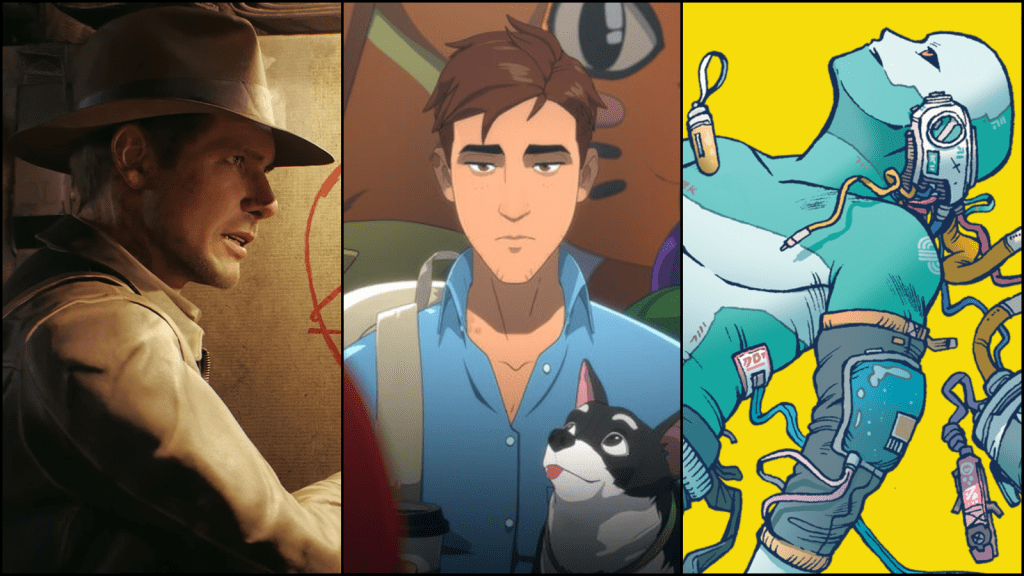
Or: How I Learned It Only Takes A Few People To Make An Opera Out Of A Bridge.
It’s hard to feel optimistic about the state of the games industry in 2025. If studio executives aren’t laying off developers en masse, or (allegedly) clamping down hard on anyone fighting for fairer treatment, they’re going all-in on so-called “generative AI” that will do nothing except fill their games with plagiarised, homogenised slop.
And yet, when I think about the games I played this year, I can’t help but be hopeful. There were some absolutely incredible releases, bursting with imagination and genuine artistry, often made by extremely small groups of developers. In fact, of the 10 games listed below, half were made by studios with fewer than 50 people. Three of them were made by teams I could count on one hand.
The industry bubble is well and truly bursting right now, and a lot of people will be hurting when the smoke clears. But I think that games as an art form are only going to get better in years to come.
Have I missed your favourite game of the year? Let me know! I’m always looking for recommendations! And if you like this end-of-year list, please consider subscribing to get more writing from me in 2026:
10. Atomfall

When people talk about the need for greater representation in video games, they aren’t usually asking for more titles to be set in the Lake District. Still, as someone who was born and raised in Cumbria, I got a real kick out of exploring the hills and dales of Atomfall, which uses the real-life Windscale nuclear disaster as the jumping-off point for an intriguing mystery that takes cues from classic British sci-fi stories like The Day of the Triffids or The War of the Worlds.
While it’s chock-full of quirky humour (including references to Mr Bean and Fawlty Towers), what makes Atomfall more than just “British Fallout” is the way it doles out its story. Rather than being led by the nose and told exactly where to go at all times, the player is instead given a series of breadcrumbs and left to choose which leads to explore on their own. It’s a refreshing change of pace, and the story’s twists and turns feel all the more exciting because I discovered them organically.
9. Rue Valley
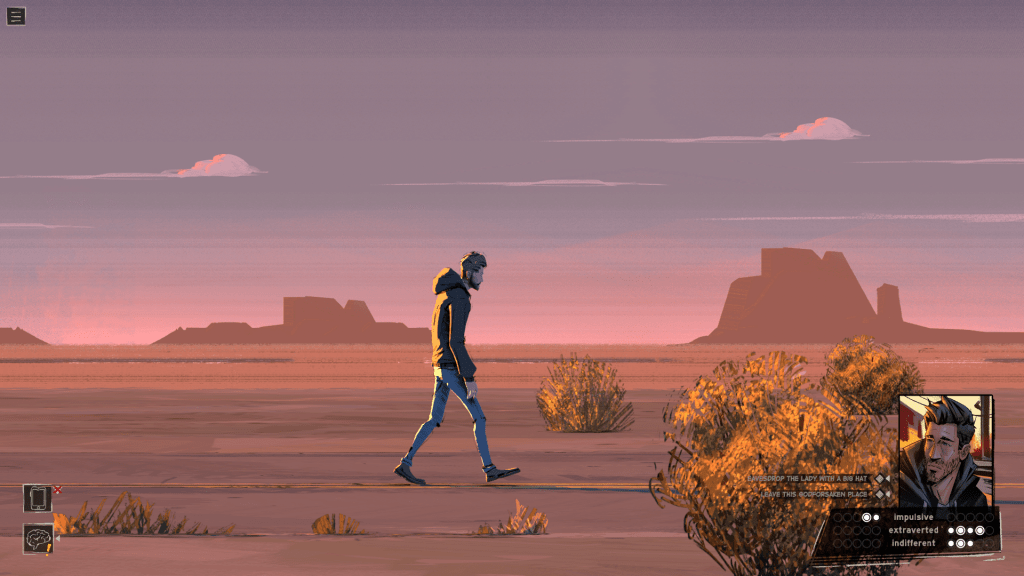
Sometimes, wearing your influences on your sleeve can work against you. With its isometric view and scrolling conversations, Rue Valley inevitably invites comparison with Disco Elysium: one of the greatest pieces of interactive storytelling ever made. While Owlcat Studio’s debut title isn’t on the same level as ZA/UM’s masterpiece, it eventually finds the confidence to tell its own story about a man trapped in a 47-minute time-loop.
Rue Valley is less an RPG than an old-school point-and-click adventure, with traditional inventory items replaced with pieces of information doled out in conversations with well-written characters. Time-loops are having a bit of a moment in gaming, but this one stands out by turning its recurring story into a powerful metaphor for depression and the salvation that can come with embracing life one day at a time. Albert Camus would be proud.
8. Lost Records: Bloom & Rage
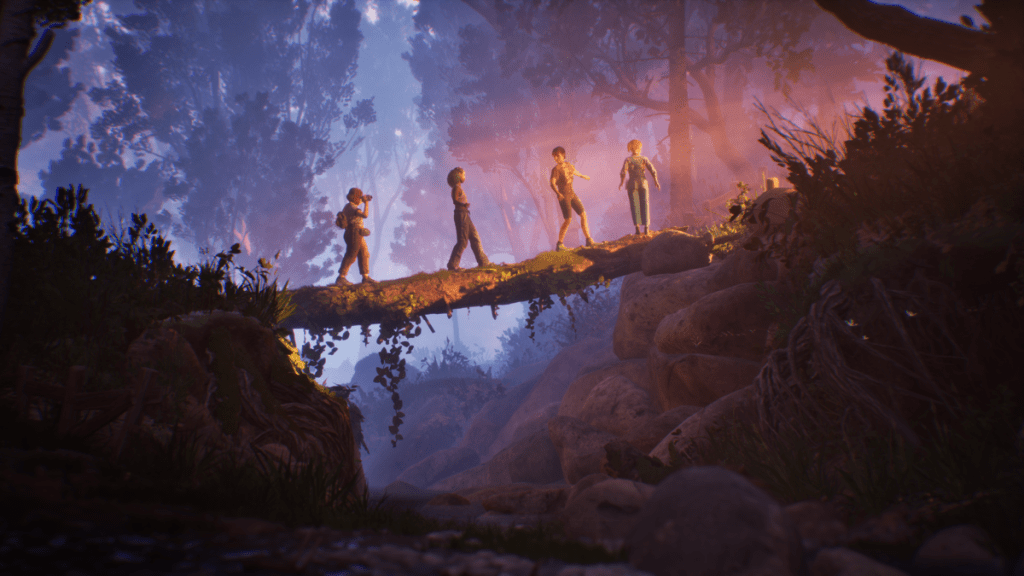
I’ve always been a bit lukewarm on Life is Strange, Don’t Nod’s series of playable coming-of-age stories about superpowered teenagers. But Lost Records‘ protagonist Swann Holloway and her fellow social outcasts are so compelling that I became completely enamoured with their story: both in its more mundane moments of teenage cameraderie, and when the plot eventually veers into supernatural territory à la Stephen King. It even manages to subvert some of the expectations set up by Life is Strange and its ilk in clever ways.
These sorts of choose-your-own-adventure games often fall down because of their branching narratives, where supposedly earth-shattering choices prove to have mundane consequences. Lost Records works so well because it understands the inverse. Tiny things like a catty remark or a poorly-timed joke can blow up an entire friendship: and when you’re a teenager, that really can feel like the end of the world.
7. Despelote
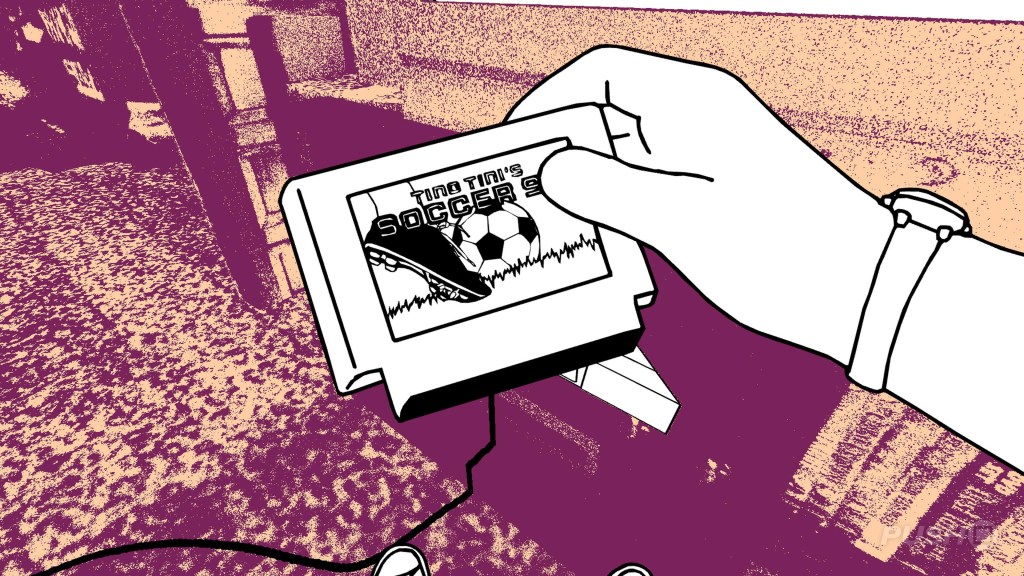
I’ve previously talked about my belief that games have even more potential than films to be what Roger Ebert called “a machine that generates empathy”, and Despelote is the perfect encapsulation of why. It’s a playable memoir: a snapshot of developer Julián Cordero’s childhood as his home nation of Ecuador qualified for the 2002 FIFA World Cup.
In case it wasn’t obvious, I am not from Ecuador. I don’t even like football. And yet, for the two hours that I played Despelote, I felt utterly transported to the city of Quito. The realistic soundscape and the striking backgrounds resembling grainy photography combined to give me the overwhelming feeling of déjà vu, as if I was recalling half-forgotten memories of somewhere I’ve never been. It’s a remarkable achievement, and a testament to the power games have as a medium for communication across cultural boundaries.
6. Indiana Jones and the Great Circle
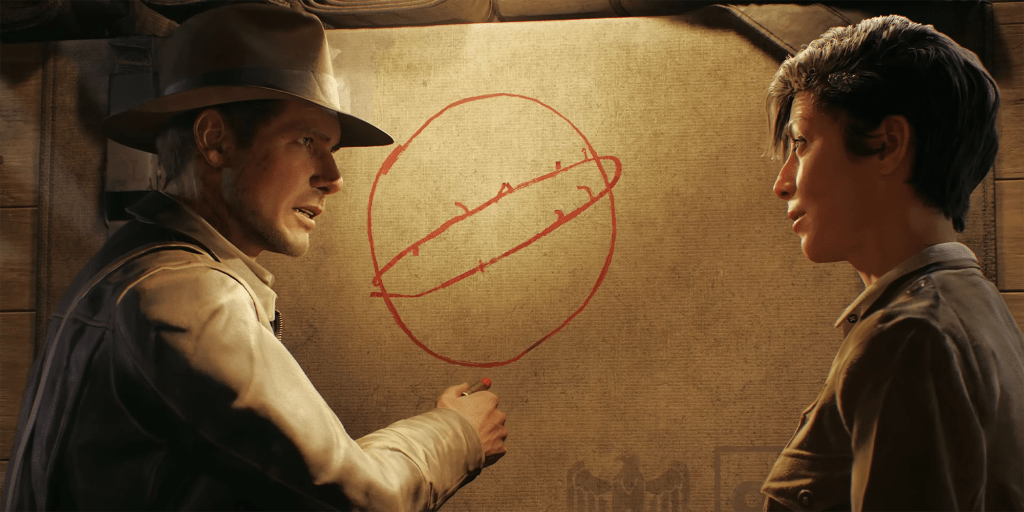
The best compliment I can pay to Indiana Jones and the Great Circle is that it feels like the tie-in game for a movie that doesn’t exist. Every part of the presentation — from the hints of John Williams in the score, to the cinematography of cutscenes, to Troy Baker’s eerily accurate Harrison Ford impression — is immaculate, and the globe-trotting narrative is easily the best of Indy’s adventures since The Last Crusade.
MachineGames previously made the excellent modern Wolfenstein titles so it’s unsurprising that, just like in real life, punching fascists in the game never gets old. But The Great Circle shines brightest in its quieter moments, when you’re clambering around hidden temples and using your wits (and your whip) to solve ancient puzzles and dodge deadly traps. Clichéd as it sounds, you really do feel like Dr Henry Jones Jr.
5. Ghost of Yōtei
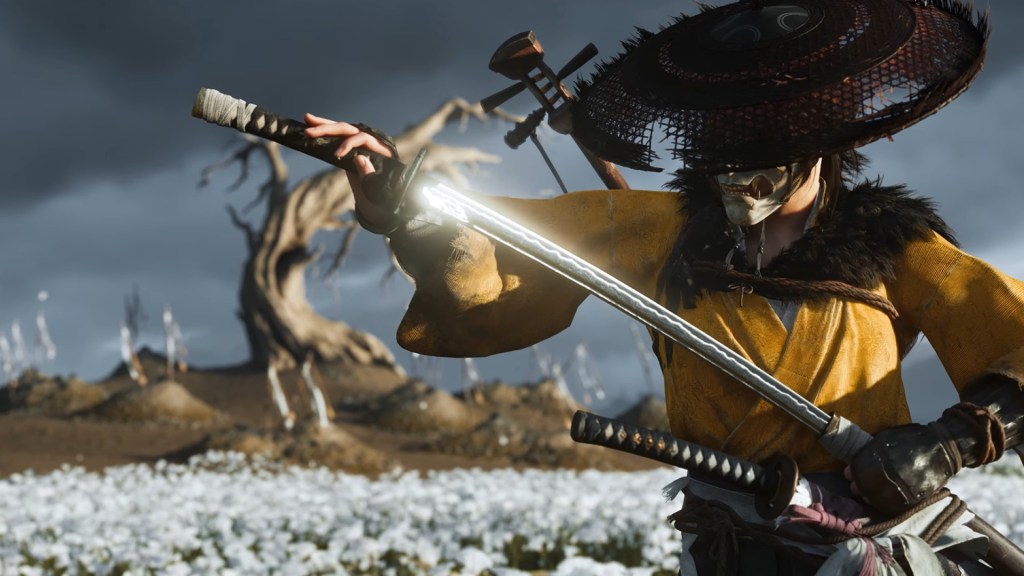
In the last decade, Sony has basically perfected the formula for the quintessential AAA blockbuster video game: using bleeding-edge graphics and precisely-tuned gameplay to tell a compelling and emotional story. Ghost of Yōtei might not deviate from that formula, but it does polish it to a mirror shine.
Sucker Punch’s depiction of the Ezo region of Japan is an absolute marvel of open world game design. Inspired by The Legend of Zelda: Breath of the Wild and its hands-off approach, it eschews the usual smorgasbord of objective markers in favour of letting the player drink in the stunning painterly vistas and explore based on their own curiosity. And while the revenge story at the centre of the narrative is a simple and familiar one, it’s told with the visual flair of an Akira Kurosawa film and grounded by a terrific performance from actor Erika Ishii.
4. The Outer Worlds 2
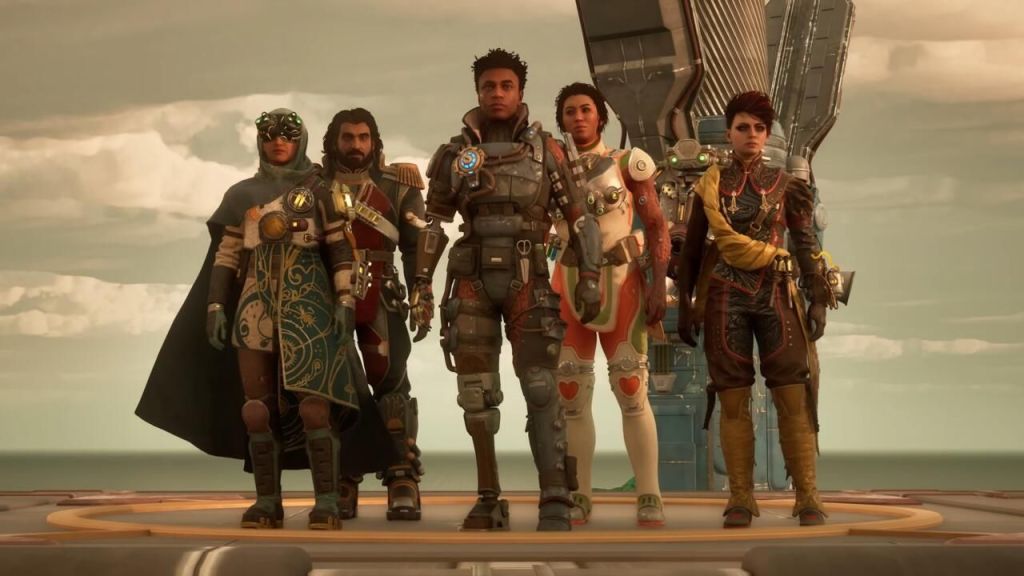
“More of the same” can often feel like a derogatory way to describe a sequel, but Obsidian Entertainment makes it work in their favour. Where The Outer Worlds felt somewhat restrained in its execution, The Outer Worlds 2 takes everything that was great about the first game and cranks it up to eleven.
The sci-fi satire of greedy corporations and authoritarian regimes is hilarious and bitingly angry; the refined combat has all the swashbuckling action of a Flash Gordon serial; and the roleplaying is even more granular than ever. Early on my character was given a flaw called “Bad Knees”, which caused him to make an awful crunching noise whenever he crouched that alerted all nearby enemies and made stealth nearly impossible. As someone whose knees stopped working properly in my mid-teens, I don’t think I’ve ever felt more seen by a video game.
3. Dispatch

The debut game from AdHoc Studios, Dispatch somehow managed to rejuvenate two tired genres at once — superhero stories and the narrative-driven episodic games popularised by Telltale a decade ago — by smashing them into each other at high speed and throwing a whole bunch of dick jokes into the mix for good measure.
The primary gameplay loop (a management sim about sending a team of dysfunctional superheroes on jobs of varying difficulty) is engaging and surprisingly complex. But take that away and you’re still left with what might be the most compelling season of television I’ve watched all year: at once a laugh-out-loud workplace comedy and a heartfelt story about a bunch of fuck-ups trying really hard to become better people.
2. Blue Prince

There’s a moment in Bong Joon-Ho’s Parasite where a character opens a hidden door and reveals, with a vertigo-inducing lurch, that the story is actually much deeper than we initially realised. Blue Prince has about a dozen such moments.
What starts as a simple puzzle — find a hidden room in a mansion whose layout changes every day — gradually gives way first to a family drama, then a thorny political intrigue. That puzzle, meanwhile, is actually dozens of puzzles, intricately knotted together in a way that could take hundreds of hours to unravel. Though I eventually had to admit that the game is far too clever for me, I’m still in awe of the scale of what Tonda Ros has managed to create single-handedly. Maybe one day, when I’m older and wiser, I’ll return to Mount Holly and keep trying to uncover its secrets.
1. Citizen Sleeper 2: Starward Vector

The greatest works of science fiction hold up a skewed mirror to the anxieties of today. Citizen Sleeper 2: Starward Vector is no exception: tackling everything from the insidiousness of the gig economy to the perils of the coming AI revolution. The original game’s unique tabletop-inspired mechanic of rolling dice to determine your every action has been given some welcome tweaks and new additions to make every in-game day feel like a struggle to survive, with elaborate multi-stage heists ratcheting up the tension at key moments.
But with the help of a wonderful and diverse cast of characters and Gareth Damian Martin’s superb writing, there’s always finds a spark of hope to be found in the vacuum. As the philosopher Elton John once sang, “it’s lonely out in space,” and in the world of Starward Vector, hypercapitalism has only made everyone lonelier. Faced with such a cold and oppressive universe, forming communities isn’t just a way of finding comfort: it’s a radical act of defiance.


Leave a comment